
Shout Hotels · Malta
Where to Stay in Malta
Malta is small enough to cross in a day, and the base still changes the trip. Valletta suits history and harbour ferries. Sliema and St Julian's suit evenings out and frequent buses. The north is the easier choice for a beach-led stay, while Mdina and Rabat are the inland heritage bases. Give Gozo its own night or two rather than squeezing it into a rushed day. Iklin, in the centre of the main island, is a quiet inland alternative, not a substitute for the harbour or the coast.
Explore places to stay in Malta
Where to base yourself
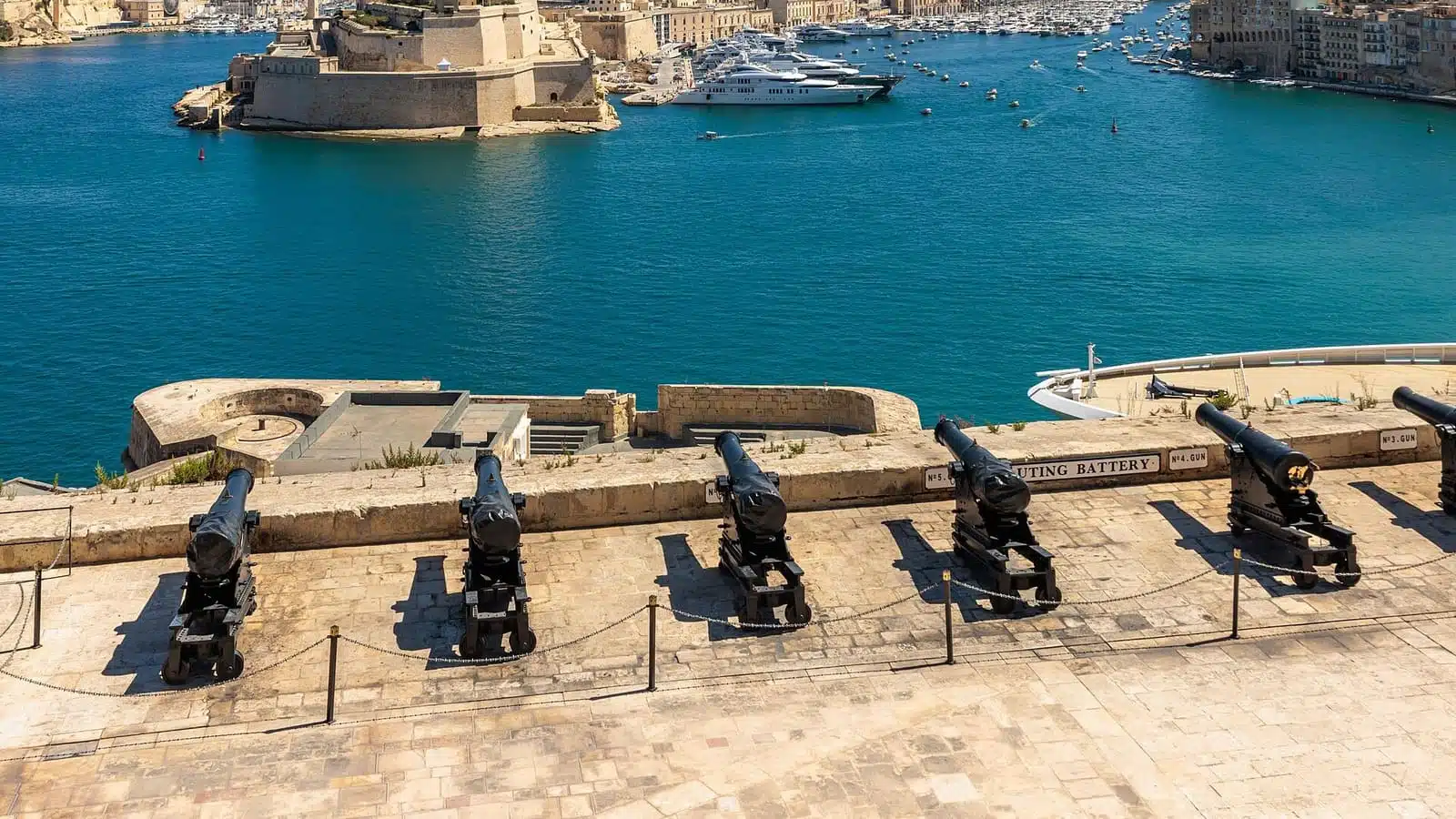
Valletta and the Grand Harbour suit a first visit built around history, museums and the water. The capital has a direct airport bus, ferries to Sliema and the Three Cities, and St John's Co-Cathedral close by. A car adds little here. Parking in the main towns is limited, and Valletta charges some vehicles to enter the controlled zone.
Sliema and St Julian's suit travellers who want restaurants, a waterfront and straightforward buses, including a direct airport service and the ferry to Valletta. Malta Public Transport describes this as one of the busiest parts of the island, with Paceville as the nightlife centre. It is a livelier, more modern base than Valletta or Mdina.
Mellieħa, Buġibba and St Paul's Bay are the practical north-coast bases, including trips that continue towards the Gozo ferry at Ċirkewwa. Airport Direct serves this corridor. A resort centre with a direct bus is not the same as a cove or a rural site, and those still need a closer look at the journey.
Mdina and Rabat suit a history-led stay away from the harbour. Rabat is on the airport bus network, and St Paul's Catacombs are a substantial Heritage Malta site. The trade-off is fewer evening ferries and a waterfront on the doorstep.
Gozo deserves to be planned as its own base, especially around Victoria and the Cittadella, rather than as a footnote to the main island. A day trip is possible. An overnight stay leaves time for the ferry and the island. Comino and the Blue Lagoon are an excursion, not a general place to stay.
Iklin is a small inland locality in the centre of the main island, useful if you want a residential base and will travel out for sightseeing. It is not a harbour town or a beach resort. The Eastern Region is the administrative area that includes Iklin. It is not a separate tourism district in this guide.
When to visit
Spring and autumn are the most comfortable seasons for a walking-heavy trip. Summer suits the sea and later harbour ferries, and it can also be severely hot. Malta International Airport has recorded a June maximum of 41.5°C, which shows what a heat event can do. It is not a normal daily temperature. Winter works well for Valletta, museums and a city break, with a greater chance of unsettled weather. One exceptional February produced 181 mm of rain, so winter is not simply mild and dry.
Harbour ferries change with the season. Valletta Ferry Services treats 1 June to 31 October as summer and 1 November to 31 May as winter, with later evening boats in summer. Check the operator for the week you travel.
Festivals Malta has published these dates, which should be checked again before you go: Notte Bianca on 3 October 2026, The Three Palaces from 27 October to 1 November 2026, the Valletta Baroque Festival from 7 to 24 January 2027, Malta Carnival from 5 to 9 February 2027, Festgħana from 20 to 23 May 2027, and the Malta Jazz Festival from 5 to 10 July 2027. These are this programme's dates, not a promise that every festival repeats on the same days.
Arrival and getting around
Malta International Airport is the air gateway. Airport Direct currently runs TD1 hourly towards Rabat, Buġibba, Mellieħa and Ċirkewwa, TD2 and TD3 about every 30 minutes towards St Julian's, Sliema, Gżira and Msida, TD4 about every 30 minutes to Valletta and the Gozo fast ferry, and TD5 hourly towards Rabat and Buġibba. The buses are advertised with luggage space. Use the journey planner for a late arrival rather than assuming every connection waits.
The standard bus fleet is low-floor, with ramps, priority seats and audio and visual announcements. That does not make every journey step-free. Not every mobility scooter or motorised wheelchair can be carried, and the stop, the ferry and the attraction each need their own check.
Public ferries link Sliema with Valletta, and Cospicua in the Three Cities with Valletta. For Gozo, the passenger fast ferry runs between Valletta and Mġarr, with a crossing of about 45 minutes. The vehicle ferry runs between Ċirkewwa and Mġarr and takes about 25 minutes. Check both operators on the day. The Gozo Channel page reviewed for this guide was still showing a timetable period that ended on 30 March 2026, so those departure times are not repeated here.
A hire car is most useful for dispersed coves, the countryside and a flexible Gozo trip. It is much less useful for a Valletta and Sliema stay, where buses and ferries are strong and parking is the friction.
Things to do
St John's Co-Cathedral is the obvious Valletta set piece with a harbour stay. Current visitor information lists Monday to Saturday opening and closure on Sundays and public holidays. Mobility access is available, with restrictions in parts of the complex. Check the hours before you go.
The Ħal Saflieni Hypogeum in Paola is not a walk-in sight. Heritage Malta asks visitors to book early, arrive before the timed entry, wear closed shoes and leave cameras behind. Children under six are not admitted, and the archaeological site is not wheelchair accessible.
Ħaġar Qim and Mnajdra, near Qrendi, put two prehistoric temples in one coastal landscape. Mnajdra is about 500 metres downhill from Ħaġar Qim. Ħaġar Qim can be visited with assistance. Mnajdra is not accessible in the same way. Allow more than a brief stop.
The Cittadella in Victoria, also called Rabat, is the natural anchor for Gozo. The fortifications are publicly accessible around the clock without an entrance charge. Museums and the visitor centre have their own hours and tickets.
The Blue Lagoon on Comino now uses a free timed landing pass for people stepping ashore in the controlled area. Book it before the trip and recheck the slots, because the access scheme can change. St Paul's Catacombs in Rabat are a useful companion to Mdina. Heritage Malta describes access as partial, so the site should not be treated as wholly step-free.
Food and drink
Choose by place rather than by a league table. Ta' Nenu, at 143 St Dominic Street in Valletta, is a restored bakery serving traditional Maltese food, with published lunch and dinner periods. Telephone if you are hoping to eat the same day.
Ta Kolina is a family-run Maltese restaurant on Tower Road in Sliema, a convenient choice if that is the base. Diar il-Bniet in Ħad-Dingli is the rural contrast, built around Maltese cooking and local produce. Its own pages have disagreed about hours, so check the restaurant before the journey.
On Gozo, Ta' Mena Estate at Xagħra is a produce and wine stop rather than a normal restaurant booking. Organised tours were suspended for renovation when this guide was prepared, and road works may affect the visit. None of these venues is a guarantee of a particular diet or an award.
Questions about staying in Malta
Where is a good base in Malta without a car?
Valletta or Sliema and St Julian's give the strongest mix of buses, ferries and sightseeing. Valletta has Airport Direct TD4 and ferries to Sliema and the Three Cities. Sliema and St Julian's have Airport Direct TD3, several buses to Valletta and the Sliema ferry. Mdina, Rabat and Gozo can also work without a car, with more careful route planning.
Do I need a hire car?
Not for a harbour stay in Valletta or Sliema. Buses and ferries cover those routes, and Transport Malta warns that parking is limited, especially in Valletta. A car becomes useful when the plan is dispersed coves, countryside or a flexible few days on Gozo.
How do I get from the airport to the main areas?
Airport Direct runs from Malta International Airport to Valletta, Sliema, St Julian's, Rabat, Buġibba, Mellieħa and Ċirkewwa, among other stops. Frequency is about every 30 or 60 minutes depending on the route. Check the journey planner for your arrival time.
How do I reach Gozo?
The passenger fast ferry runs between Valletta and Mġarr and takes about 45 minutes. The vehicle ferry runs between Ċirkewwa and Mġarr and takes about 25 minutes. Check both operators for the day's departures.
Do I need to book the Blue Lagoon?
Yes, if you plan to land in the controlled Blue Lagoon area on Comino. The current system uses a free timed landing pass, subject to availability. Book ahead and check the rules again before travel.
When is the best time to visit?
There is no single best month. Spring and autumn are the strongest general choice for walking and sightseeing. Summer suits the sea and has later harbour ferries, with a real risk of severe heat. Winter suits culture and the city, and it can be wet and windy, with shorter ferry hours.
Is Malta fully accessible by wheelchair?
No. The buses have low floors and ramps, but attractions differ. St John's has mobility access with some restricted areas. Ħaġar Qim can be visited with assistance, while Mnajdra is more limited. The Hypogeum is not wheelchair accessible. Check the whole journey, not only the bus.
Sources and useful links
- VisitMalta: the Maltese Islands
- Malta Public Transport: Airport Direct
- Malta Public Transport: bus accessibility
- Valletta Ferry Services: seasonal schedule
- Gozo Highspeed: Valletta to Mġarr schedule
- Gozo Channel: Ċirkewwa to Mġarr
- Transport Malta: parking and Valletta access
- St John's Co-Cathedral: visitor information
- Heritage Malta: Hal Saflieni Hypogeum
- Heritage Malta: Ħaġar Qim and Mnajdra
- Visit Gozo: the Cittadella
- Blue Lagoon Access Management System
- Festivals Malta: current programme