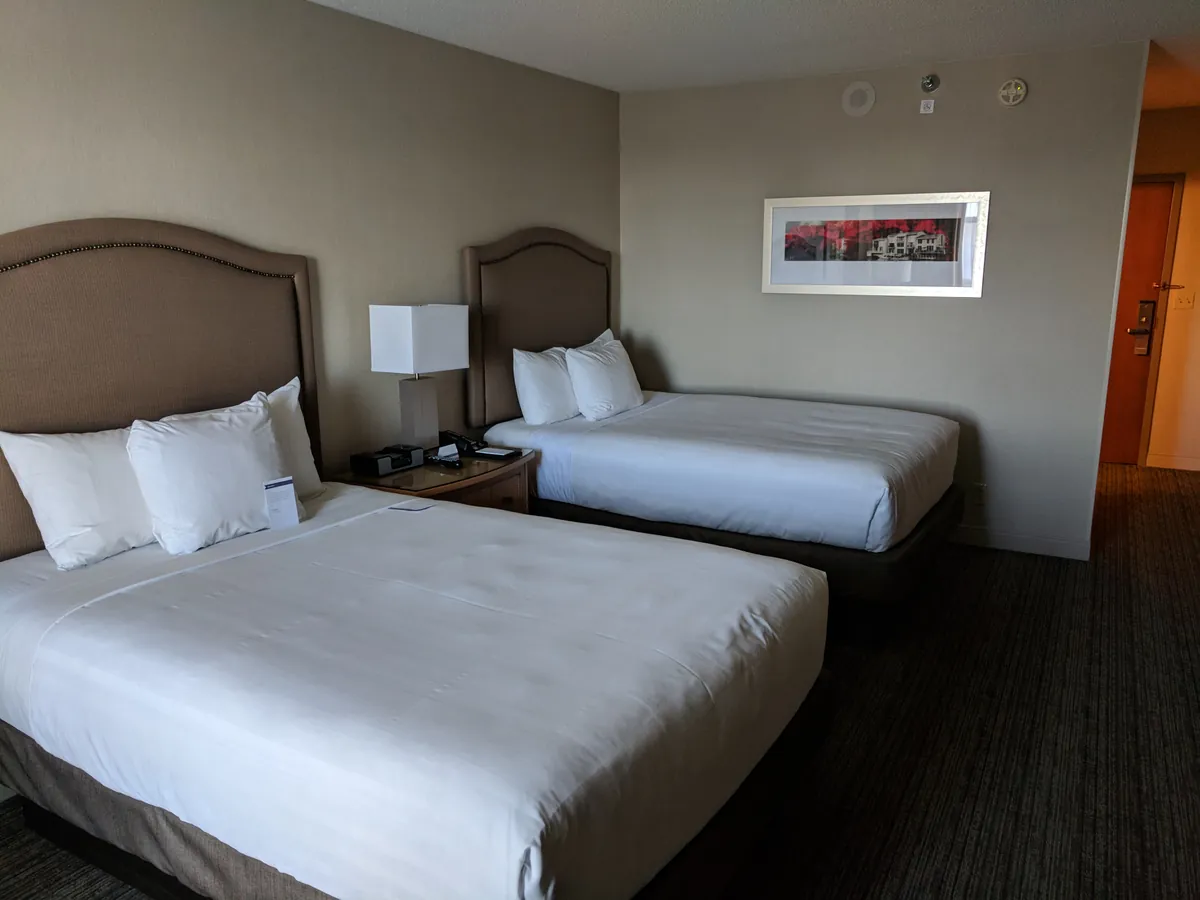
A twin room is intended for separate sleeping arrangements; a double room normally has one shared bed. Check the actual bed list straight away: a twin can mean two conventional beds or a main bed plus a sofa bed, and a room sold as a double can contain a king-size mattress.
The safe rule is to book the named configuration you need, then get written confirmation if separate beds are essential. A preference box is not the same as a guarantee.
Twin room and double room: the basic difference
A twin room is designed for two people sleeping separately, but the two sleeping surfaces need not be identical. Premier Inn says most of its twin rooms have a double or king-size main bed plus a single sofa bed; other formats have two single or double beds. Ask the individual hotel which format you are booking.
A double room normally provides one shared bed for one or two guests. The label does not promise that the room is larger than a twin or identify the exact mattress width. Read the bed description for the particular room and rate.
Both room types normally have a maximum occupancy of two, but occupancy and beds are separate questions. A room allowed for two guests might contain one double bed, two singles, or one main bed plus another sleeping surface.
What “double or twin” means
“Double or twin”, sometimes shown as “twin/double”, describes alternative bed arrangements. It does not, by itself, establish which one your reservation includes. Check whether the booking flow confirms a particular configuration or only records a preference.
Look closely at the booking wording:
- “Bed preference” or “subject to availability” means the hotel may not promise your choice.
- “One double bed or two single beds” describes alternatives, not necessarily a confirmed selection.
- “Twin room” with two singles explicitly listed is stronger wording.
- A message from the property confirming two separate beds is the clearest evidence when the setup matters.
If two colleagues, siblings or friends cannot share a bed, do not leave the choice to arrival day. Send the request before the free-cancellation deadline and keep the reply with the booking confirmation.
Zip-and-link beds are useful, but ask what is guaranteed
Some hotels use two mattresses that can be joined as one larger bed or separated into twins. These are often called zip-and-link beds. They give the hotel flexibility, but the booking label may describe the room as a double even when a twin arrangement is possible.
Ask two questions: can the beds be separated, and will that arrangement be confirmed for your dates? A hotel saying it “can usually be done” is helpful, but it is still weaker than a confirmed room assignment or bed setup.
Joined beds may also feel different from a single continuous mattress. If the join itself would bother you, ask whether the double arrangement is a true double or two linked singles.
A twin room does not always mean two equal beds
Brand language varies. Some rooms marketed for twin occupancy use a main double or king bed plus a sofa bed. Premier Inn's room information is a useful example of why the details matter: the sleeping arrangement can vary by hotel and room type.
Read the bed list, not just the room name. “Sleeps two” tells you capacity. It does not tell you that both guests receive a normal single bed.
A sofa bed is a different sleeping surface from a conventional single mattress. Check its suitability for the intended adult or child, whether staff prepare it in advance and whether bedding is included.
Double room does not mean two double beds
This causes particular confusion on international booking sites. In UK hotel language, a double room normally means one double bed. A room with two double beds should say exactly that, often as “two double beds” or “double-double”.
Never infer the bed count from the word “double” alone. Check the icons, the written bed list and the photographs together. Photographs can show several room categories, so the written room details still take priority.
The booking checklist
- Enter the correct number and ages of guests before comparing rooms.
- Read the exact bed list for the rate, not only the room-category heading.
- Check whether the choice is confirmed or recorded as a preference.
- Look for sofa-bed, rollaway-bed or zip-and-link wording.
- Ask whether both beds are permanent and suitable for the intended guests.
- Get an essential twin setup confirmed in writing before the cancellation window closes.
- Recheck the confirmation after any date or room change, because an amendment can change the allocated category.
What to write to the hotel
Keep the request short and specific: “We are two adults and require two separate permanent beds. Please confirm that the room booked will be set up as a twin, not one double bed or a sofa bed.”
If linked mattresses are acceptable, say so. If they are not, say that as well. Mentioning why can help, but you do not need to disclose personal information simply to make the requirement clear.
What if the wrong bed setup is provided?
Start with the booking confirmation. If it specifies two single beds, show that wording to reception and ask for the booked configuration or a suitable alternative. If it only records a preference, do not assume a change will be possible on arrival. Any remedy depends on the booking and supplier terms.
Take screenshots of the room wording at the time of booking. Listings can change, and a saved confirmation is more useful than remembering what the page appeared to promise.
If a separate room is the only workable alternative, our Connecting Hotel Rooms guide explains the difference between a confirmed connecting arrangement and a request. Families should also check the named beds and maximum occupancy rather than assuming the word “family” settles both.
The answer in one line
Choose a twin room for two separate beds and a double room for one shared bed. When the listing says “double or twin”, treat your selection as unconfirmed until the booking terms or the hotel explicitly guarantee it.
Sources and image credits
- Opening image: Two beds in a hotel room. Illustration only; no connecting doors or named-property room configuration is represented. Kurt Kaiser · CC0 1.0. Resized and compressed as WebP.
- premierinn.com · our-rooms.html
- premierinn.com · booking-terms-and-conditions.html
- travelodge.co.uk · booking-terms-conditions