
Planning a trip for next year? Europe has so many places to visit, it’s almost impossible to pick just one. You’ve probably seen the big cities on everyone’s list, but there’s a whole other side to the continent: quiet villages, wild coastlines, and hidden corners that most people never even hear about. Whether you want to relax on a remote island, wander through old towns, or just eat your way through a region, there’s something for every mood. Here’s a look at some unforgettable destinations in Europe to visit in 2025, from lesser-known finds to those classic spots you just can’t skip.
Key Takeaways
- Europe’s best trips aren’t always in the big cities. Sometimes the smaller, lesser-known spots are the most memorable.
- You can find everything from peaceful beaches and wild mountains to colourful villages and buzzing old towns, all within a few hours’ travel.
- Trying local food and chatting with people in quieter places often gives you a better feel for the country.
- It’s worth planning ahead, especially if you want to visit places that aren’t packed with tourists yet.
- Mixing famous sights with quieter finds makes for a much richer travel experience.
Charming Corners of France to Explore
France is much more than Paris and the Riviera, especially if you’re after hidden corners and a slower pace. Head away from the big sights and you’ll bump into places where time seems to move differently, markets always smell of fresh bread, and each meal is worth remembering. Here’s where you can find that real, everyday French magic.
Soak Up Sun and History in Hérault
You’ll notice Hérault switches between coast and countryside like it can’t quite decide what to be. One moment you’re standing by the Mediterranean, with sandy beaches, tiny fishing ports, and that feeling you get when the sun just won’t quit. But drive for half an hour and you’re winding through gorges, stone villages, and river valleys carved into the garrigue.
It’s a region that feels lived-in, not staged. You wander medieval lanes, stumble upon riverside cafés, and half expect to run into a local festival. The headline stop inland is Saint-Guilhem-le-Désert, one of the officially listed Plus Beaux Villages de France, grown up around the ninth-century Abbey of Gellone. The abbey and the nearby bridge are UNESCO-listed as part of the pilgrim Routes of Santiago de Compostela in France. Just below the village the medieval Pont du Diable spans the Hérault where the river opens into the gorges. Here are a few experiences not to miss:
- Kayak or swim in the clear waters of the Hérault Gorges, easiest reached from the Pont du Diable below Saint-Guilhem-le-Désert
- Bring back olives, wine or local cheese from one of the village markets
- Take a slow walk through Pézenas’ old town, packed with sixteenth- to eighteenth-century mansions and the theatre streets where Molière once performed
Most first-timers only see the coast, but if you follow the river inland toward the gorges, you’ll find landscapes and stories that stick with you long afterwards.
Unwind Along France’s Atlantic Coast
If you’re tired of the usual crowds, the Atlantic Coast is an antidote. Picture wide sandy beaches where you can walk for miles, strong waves for surfers, and towns like La Rochelle and Biarritz, which somehow pull off relaxed and buzzy at the same time.
Here’s a simple breakdown of what you might find:
| Town | Best For | A Must-Do |
|---|---|---|
| La Rochelle | Seafood & old harbours | Eat oysters by the sea |
| Biarritz | Surf & sunsets | Watch evening surfers |
| Arcachon | Dune views | Climb the Dune du Pilat, the tallest sand dune in Europe |
If you want to switch off, this coast does it better than most. Nobody’s in a rush, and dinner somehow always involves fresh fish and good local wine.
Discover Vineyard Traditions in Bourgogne-Franche-Comté
Bourgogne-Franche-Comté (its western half is the historic Burgundy wine country) is where you truly see French food and winemaking in action. Vineyards fill the hills as far as the eye goes, and the small towns between them are as proud as ever when it comes to their traditions. Wine is the big draw, but so are cheese stalls, slow lunches, and the fact that everything seems made for lazy wandering.
A few reasons to come here:
- Taste the Pinot Noir and Chardonnay the Côte d’Or is famous for in a local cellar
- Cycle between sleepy villages and spot cows grazing toward the Jura hills
- Book a long lunch in Beaune or Dijon, where the menus run on for pages
If there’s a place to linger and forget about itineraries, Burgundy is it. The wine flows, the landscape rolls on and on, and nobody seems in a hurry to do anything but enjoy it.
Spain’s Secret Spots for Adventurous Souls
If you think Spain’s all about packed beaches and busy cities, you’re in for a surprise. There’s a hidden side, with wild coastlines, remote mountains, and peaceful villages where life still moves slow. You don’t have to fight for a spot on the sand or queue for tapas here. Let’s look at three places that will show you a different Spain.
Marvel at the Wild Beauty of Cabo de Gata
Cabo de Gata in Andalucía is one of those places where you feel like you’ve landed at the world’s edge. This is Spain’s driest corner, a volcanic natural park where the landscape is tough and bare, dotted with spiky agave, and cliffs fall straight down to tiny coves with unbelievably clear water. If you love being out in the open, you’ll find quiet beaches like Playa de los Muertos and Mónsul, coastal trails, and old whitewashed fishing villages such as Las Negras and La Isleta del Moro where you can get grilled seafood right by the sea. There’s also the chance to kayak along the coast and peek into hidden sea caves, perfect for anyone who likes their holidays a little rough around the edges, far from the crowds. Up for getting your feet wet? You’ll find some adventurous ocean cave kayaking here.
Hike the Dramatic Picos de Europa
Northern Spain’s Picos de Europa is a limestone range no one expects, straddling Asturias, Cantabria and León. It’s incredibly green, with sharp stone peaks that almost don’t look real. Hiking here is pure joy: cool air, wildflowers everywhere in spring, and one amazing view after another. Most people pass through for a day, but you could stay in a mountain village and try the local Cabrales blue cheese and cloudy Asturian cider. Don’t be shocked if you end up sharing the path with herds of cows. Life here is unhurried, and it’s all about the scenery, not the schedule or the Wi-Fi.
Why the Picos de Europa Stand Out
- The vertical cliffs and glacial valleys are unmatched anywhere in Spain.
- Small, walkable villages keep things simple and friendly.
- Plenty of trails for all levels, from short strolls to all-day routes like the famous Cares Gorge walk.
Experience Rural Life in La Mancha
La Mancha, right in the middle of the country, is classic Spain. It’s flat, full of sun, with rows of white windmills on the ridges and endless vineyards. You can wander through half-forgotten villages, try some hearty local stews, and sip red wine made just down the road. Fans of Don Quixote will spot the windmills Cervantes described at Consuegra and Campo de Criptana. If you want to really slow down, local farm stays give you a place to sleep, eat, and join in on whatever the day brings, from grape picking in autumn to learning cheese-making by hand. Why not check out these unique farm stay options for something that feels miles away from the usual package holidays?
If your idea of a great trip means meeting people who actually live there, tasting homemade food, and having stories to tell that don’t start with a selfie stick, Spain’s wild corners will be hard to beat.
Italy’s Enchanting Villages Beyond the Mainstream
If you ever thought Italy was just massive crowds in Rome or endless queues at Florence’s museums, you’re in for a surprise. Smaller towns and villages across the country bring you closer to real Italian life, where everything moves at a gentler pace and locals might actually stop for a chat. It doesn’t have to mean giving up comfort, either. From rustic country houses to eco-friendly resorts, there are plenty of unique places to stay if you’re willing to go a bit off the main road.
Wander the Colourful Streets of Bosa
It’s easy to overlook Bosa on a map of Sardinia, but the second you arrive, you’ll know you’ve made the right decision. Houses painted in shades of melon, blue, and pink cover the hills along the Temo River, the only navigable river in Sardinia. You could spend an afternoon just wandering those lanes, snapping photos and ducking into tiny bakeries for a sweet treat. Bosa’s Malvasia wine and almond pastries are worth a taste, too. Things to do in Bosa:
- Climb up to the twelfth-century Malaspina Castle (Castello di Serravalle) for river-valley views
- Stroll riverside at sunset for the best light on those colourful houses
- Try the local seafood and join a slow-paced evening passeggiata
Bosa isn’t loud or flashy. It’s the kind of place where you actually notice the rhythm of the village changing from morning to night.
Relax in Saturnia’s Soothing Hot Springs
Imagine a spot where the water stays warm year-round, and all you have to do is sit back as the thermal pools bubble up around you. Saturnia, in southern Tuscany’s Maremma, is famous for the Cascate del Mulino, natural travertine terraces fed by a sulphur spring with no tickets and no time slots, just free public pools surrounded by countryside. There’s barely any phone signal and the most pressing choice is whether to move to the next pool or just float right where you are. If you want to stay nearby, there are cosy country houses in the area that are perfect for early-morning dips before the daytrippers arrive.
| Hot Springs Quick Facts | Info |
|---|---|
| Water temperature | 37.5°C (99.5°F), steady year-round |
| Mineral content | Rich in sulphur, calcium and magnesium |
| Best time to visit | Early morning or late evening |
| Cost | Free (public Cascate del Mulino pools) |
Discover the Medieval Magic of Trastevere, Rome
Rome is famous, but Trastevere keeps a quieter side of the city. Just across the Tiber from the historic centre, this neighbourhood is a patchwork of narrow cobbled alleys, ancient churches, and lively piazzas. At night, it feels like the whole district heads outside: trattorias spill into the streets, musicians play, and you might spend hours with just a pizza and a carafe of house wine. What makes Trastevere stand out?
- Fewer big-ticket sights, more everyday local life, especially after dark
- Historic churches like Santa Maria in Trastevere, one of the oldest churches in Rome and among the first dedicated to the Virgin Mary, whose golden mosaics are among the most celebrated in the city
- Endless food options, from traditional Roman dishes to creative street food
Step across the river in Rome and you’ll find a neighbourhood that’s equal parts romance and real life: friendly, busy, and impossible to forget.
It doesn’t take much to see a different Italy, especially if you trade headline cities for some countryside charm. And if you want to add a bit of adventure, holiday parks across Tuscany (find top spots) offer a brilliant base for exploring both nature and culture at your own speed.
Captivating Coastal and Island Escapes
Imagine wandering deserted sands, friendly villages and coastlines where the only sounds are waves and the odd fishing boat. For travellers tired of crowded resorts and over-photographed beaches, Europe’s lesser-known coastlines and islands offer a breath of fresh air and a real sense of escape. Whether you want quiet moments, authentic food, or just a place to truly unwind, you’re bound to find it in one of these off-the-radar destinations.
Chase Serenity in Greece’s Halki Island
Halki (also spelled Chalki) is a tiny island about 9 km west of Rhodes in the Dodecanese, and it feels like its own peaceful world. It is one of Greece’s smallest inhabited islands, with a single village, Emborio, whose neoclassical houses rise like an amphitheatre above the harbour. Here, you can stroll the colourful waterfront in the evening, watch fishing boats come and go, and chat with shopkeepers who’ve got all the time in the world. There are no big resorts or noisy clubs, just family-run guesthouses and a handful of tavernas dishing up whatever’s freshest that day.
- Turquoise water, crystal clear and perfect for swimming
- Simple walking paths with great sea views, including the trail up to the ruined Castle of the Knights
- The sense that time genuinely slows down
When you spend a few days on Halki, you might catch yourself actually relaxing, sinking comfortably into local rhythms.
Enjoy Unspoilt Shores in the Outer Hebrides
The Outer Hebrides, a chain of islands off Scotland’s west coast, can surprise you. You’ll find wide beaches with sand as pale and clear as the Caribbean, but with just a handful of walkers and the odd sheep. Windy and wild, it’s a place for those who like things natural: dunes, machair (a wildflower-dotted coastal grassland found almost nowhere else in the world, with the Outer Hebrides holding its finest examples), and seascapes that change with every cloud and tide.
When to visit the Outer Hebrides:
| Month | Daylight Hours | Average Temp (°C) | Crowd Levels |
|---|---|---|---|
| May – June | 17 – 18 | 10 – 15 | Quiet |
| July – August | 17 – 18 | 14 – 17 | Moderate |
| September | 13 – 15 | 12 – 15 | Quiet |
- Catch the CalMac ferry for a real adventure getting there
- Visit Luskentyre Beach on Harris for sweeping views
- Try a proper Scottish seafood dinner at a local café
Catch Waves and Sunsets in the Algarve
The Algarve, down in southern Portugal, gets sunshine almost year round. And while some towns get busy, you can almost always find a little cove or windswept headland to call your own. The walks along sandstone cliffs are easy and full of surprises: caves, arches, and tiny fishermen’s chapels painted in bright white.
- Paddle in the warm shallows off Praia da Marinha, one of the coast’s most photographed beaches
- Stop at a local bakery for a pastel de nata and an espresso
- Watch the sun set from a beach bar in Sagres, out on Europe’s south-western tip, surrounded by surfers and friendly dogs
No matter where you end up along the Algarve, there’s always a fresh fish grill, cold drink, and a laid-back vibe that makes you want to stay just a little longer.
Underrated Wonders of Germany
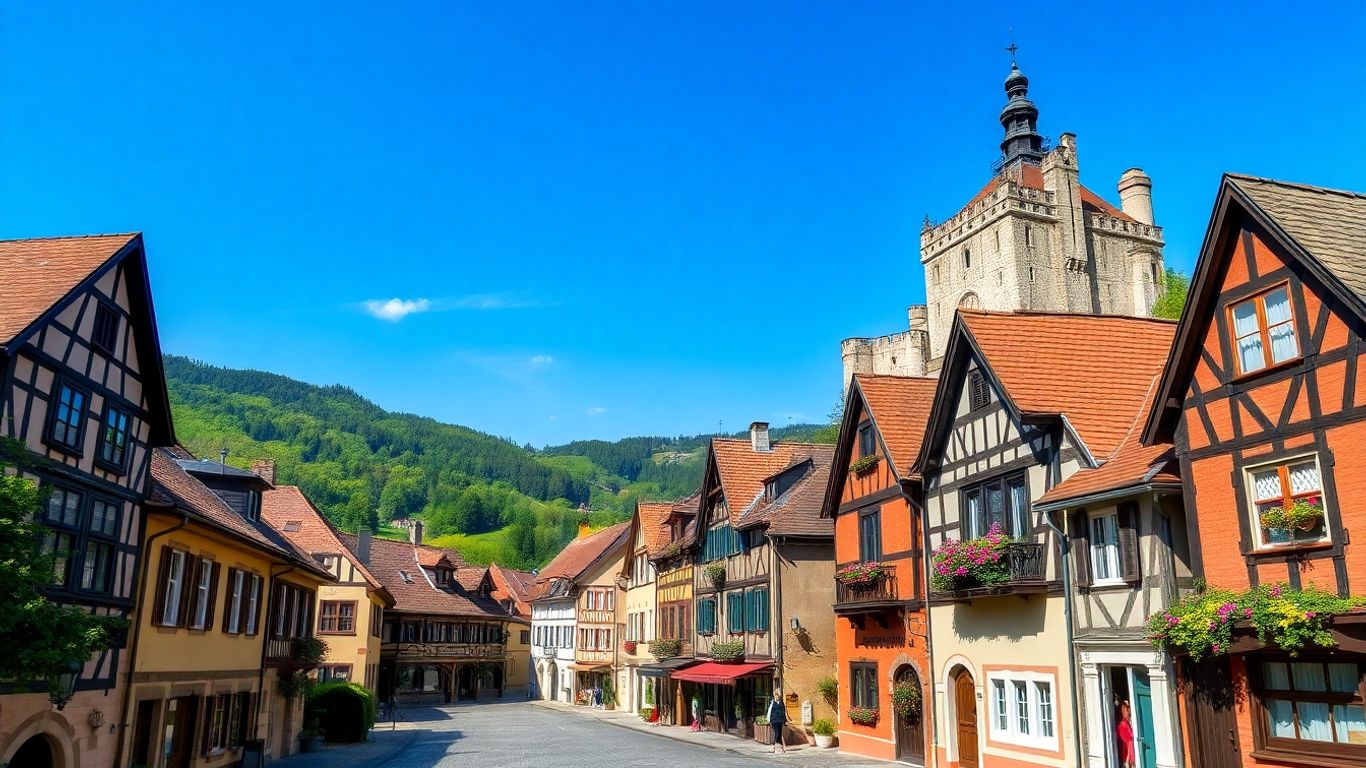
Ever thought of skipping Berlin and Munich and going somewhere a bit quieter in Germany? You might be missing out if you haven’t. Germany’s best surprises often wait outside the usual tourist trail, where small towns, river valleys and rolling mountains make for unforgettable days and hardly any crowds.
Wind Your Way Through the Moselle Valley
The Moselle Valley doesn’t get half as much attention as the Rhine, but honestly, that’s a good thing. Vineyards slip down some of the steepest slopes in Europe to the slow-moving river, tiny wine villages pop up around every curve, and grilled trout is served at riverbank inns. It’s the kind of place where you taste Riesling right beside the vines it came from, not in some crowded tasting room.
- Picture-perfect castles top the hills: Burg Eltz and Reichsburg Cochem are must-sees.
- Rent a bike for the best ride: the level towpath hugs the Moselle for miles.
- Try the local wine festivals; September is especially lively but not overly busy.
| Key Highlights | Details |
|---|---|
| Top grape | Riesling |
| Best photo stop | The Bremm horseshoe bend (Calmont) |
| Standout castles | Burg Eltz and Reichsburg Cochem |
If you’re tired of tourist traffic, the winding country roads here lead you through scenes you’ll want to replay in your head for ages.
Step Back in Time in Fairytale Towns
Don’t let the postcards fool you. Germany’s storybook towns aren’t just for show. Places like Wernigerode, Quedlinburg (whose old town is a UNESCO World Heritage site), and Burghausen feel almost untouched by time. Burghausen guards the world’s longest castle complex, a Guinness-recognised 1,051 metres strung along the ridge above the Salzach. Half-timbered houses lean over cobbled streets, and many towns are ringed by walls and towers straight out of a children’s book.
- Medieval markets and Christmas fairs add to the charm.
- You’ll stumble on tiny museums, hidden bakeries, and odd legends.
- Many towns are easy to explore on foot. Park up and wander for hours.
Explore the Peaceful Trails of the Bavarian Alps
Maybe you want mountains but can do without the crowds at Neuschwanstein? The Bavarian Alps are made for you. Trails wind through forest, meadows, and up to chilly lakes, and every so often, there’s a silent moment where you realise it’s just you and the peaks.
- Walkers love the routes around Tegernsee or Berchtesgaden, with the emerald Königssee among the highlights.
- Try a cheery mountain hut for lunch. Look for hearty soup and Kaiserschmarrn, a sweet, fluffy shredded pancake.
- This is a place where you wake up to bird song, not city noise, and where the trailhead is often a short walk from wherever you have chosen to stay.
Sometimes, all you want is a fresh breath and somewhere new to see. Germany’s overlooked corners deliver: no planning headaches, just countryside, castles, and calm.
Spectacular Natural Beauty in the Nordics
The Nordic countries do wild places like nowhere else. Think landscapes that go on forever: green valleys, endless fjords, and lonely beaches where you might not see another soul all day. In the Nordics, nature feels close enough to touch, raw and sometimes a little intimidating, but always rewarding if you’re up for adventure. Whether you head to Iceland’s colourful highlands or the deep forests in Norway, there’s something truly special waiting at every turn.
Hike the Hidden Trails of Iceland’s Eastfjords
Most people rush past the Eastfjords, but you should take your time here. The villages are tiny and set right between the sea and mountains. You’ll spot reindeer, the only place in Iceland they roam wild, and, if you’re lucky, whales off the shore. The best part? The hiking trails often start right from your guesthouse door, weaving through quiet valleys and along steep ridges where it’s just you, some seabirds, and a ringing silence you won’t find back in the city.
Here are a few things you might enjoy in the Eastfjords:
- Wander the arts-scene streets of Seyðisfjörður, with its blue Norwegian-built church
- Try a day hike up to the peaks near Eskifjörður
- Warm up with fresh-caught fish soup at a harbour café
Spend a day lost in the Eastfjords and the fog rolling in off the ocean makes everything feel like another world, the kind you don’t really want to leave.
Bathe in the Hot Springs of Landmannalaugar
Landmannalaugar is the place to go when you want colour: rhyolite hills in pink and yellow, green moss, black lava fields. After a decent walk, there’s nothing better than kicking your boots off and soaking in the natural hot spring where cold and geothermal water meet. The pool stays warm, and the hills around you look almost painted.
It’s smart to be prepared, though. Landmannalaugar sits in Iceland’s Highlands, so here are a few tips for making it work:
- Visit in summer. The rough F-roads in are closed most of the year and usually need a 4×4.
- Bring sturdy boots: the ground can be rough and slippery.
- Arrive early or late in the day for a quieter soak.
Sample Average Temperatures in Summer (°C):
| Month | Daytime | Nighttime |
|---|---|---|
| June | 12 | 5 |
| July | 14 | 7 |
| August | 13 | 6 |
Witness the Rugged Coastline of Vík
Vík í Mýrdal sits in south Iceland and is the country’s southernmost village, a small cluster of houses clinging to the edge of the Atlantic. The black beach at nearby Reynisfjara is always windy and dramatic, with wild surf and those famous basalt columns and sea stacks looming offshore. You might watch storms roll in or catch the sun glinting off the Reynisdrangar stacks that look like they belong in a fantasy film. The sneaker waves here are genuinely dangerous, so keep well back from the water.
- Try the hike out to Dyrhólaey for birdwatching and its clifftop arch
- Pick up a slice of homemade cake at a local bakery
- Look for puffins in the summer. They nest in the cliffs every year until around mid-August.
If you’re standing out on Vík’s shoreline in June, tasting the salty wind, it’s easy to understand why these places inspire stories of giants and hidden folk. Just don’t forget your raincoat. It changes fast out here.
Cultural Delights in Lesser-Known European Cities
Europe’s got more up its sleeve than just London, Paris, and Rome. You might think you know European charm, but spend a day or two in one of these lesser-known cities, and you’ll be planning your next getaway before you even unpack your bag.
Stroll the Old Town of Riga, Latvia
Riga doesn’t shout for attention, and it doesn’t need to. You stroll around, and suddenly you realise how easy it is to get swept up in its effortless atmosphere. There are cobbled streets, timbered houses, and cafes that make the long Latvian winters feel downright cosy. One thing that stands out? Riga holds one of Europe’s greatest concentrations of Art Nouveau architecture, and its historic centre is a UNESCO World Heritage site.
- Admire the Art Nouveau facades, especially along Alberta iela, as you wander.
- Dip into the huge Central Market, housed in old Zeppelin hangars, and grab a local snack.
- Walk along the Daugava River for peaceful views.
| Must-See | Reason |
|---|---|
| House of the Blackheads | Striking rebuilt medieval guildhall |
| Riga Cathedral | The largest medieval church in the Baltics |
| Museum of the Occupation | Fascinating and moving |
Let your curiosity guide you and you’ll end up with the sorts of travel stories you look back on and actually remember.
Experience Medieval Charm in Rupit, Catalonia
Ever walked through a village where it feels like time just stopped? That’s Rupit for you, tucked into the Collsacabra highlands of inland Catalonia, a couple of hours north of Barcelona. One moment you’re winding through thick green forest, the next you’re crossing a swaying suspension footbridge into a huddle of stone houses built around the twelfth century. People come here just to slow down. There’s honestly not much else to do, and that’s the point.
Here’s what to try while in Rupit:
- Cross the famous hanging bridge over the stream (it swings, and they cap it at ten people at a time, but it’s absolutely worth it)
- Order a coffee at a tiny local café on the Plaça Major and just watch village life.
- Walk out to the Salt de Sallent, at over 100 metres the tallest waterfall in Catalonia.
Discover the Historic Town of Blagaj, Bosnia and Herzegovina
Blagaj sits quietly at the foot of a cliff, with clear water bubbling up right out of the rock. The town is home to a centuries-old Dervish monastery, the Blagaj Tekke, perched right beside the source of the Buna River. It feels peaceful, just being there. The architecture, the river, the mountain: it’s all simple and honestly beautiful in a way busy cities rarely are.
- Visit the Dervish monastery (Tekija) and have tea on the terrace.
- Walk beside the Buna River and listen to the water echo off the cliffs.
- Eat fresh trout, a local speciality served in the riverside restaurants.
Sometimes, the most moving travel moments happen far away from crowds, standing in a place where everyday life just quietly goes on.
These cities might not make the top of every guidebook, but that’s exactly why you should go. Get off the track a little, and you’ll find a Europe that sticks with you long after you come home.
Wrapping Up: Your Next European Adventure Awaits
So, there you have it: a mix of Europe’s famous sights and those tucked-away places you might not have heard of before. Whether you’re drawn to the big cities with their museums and food markets, or you’d rather wander through a quiet village where time seems to slow down, there’s something here for every kind of traveller. The best part is, you don’t have to choose just one. With a bit of planning (and maybe a few spontaneous detours), you can fit in both the classics and the surprises. Europe is always changing, and even if you’ve been before, there’s always a new corner to explore. So grab your map, pack your bag, and get ready for a trip you’ll be talking about for years. Who knows, your favourite memory might come from the place you least expected.
Frequently Asked Questions
When is the best time to visit Europe’s hidden treasures?
Spring and early autumn are great times to visit. The weather is usually mild, and there are fewer tourists, so you can enjoy the sights without big crowds.
How can I travel between these lesser-known destinations?
Trains and buses work well for most places, but renting a car gives you more freedom, especially for remote villages and countryside spots. A few of these, like the Outer Hebrides and Halki, involve a ferry crossing.
Are these places good for families?
Yes, many of these destinations are great for families. There are safe towns, outdoor activities, and friendly locals, so kids and parents can both have fun.
Do I need to speak the local language?
It helps to know a few words, but most people in tourist areas speak some English. Learning simple greetings is always appreciated by locals.
Will I find good food in these hidden spots?
Definitely. Many small towns and villages are proud of their local food. You’ll find fresh dishes, regional specialities, and sometimes even food festivals.
Is it more expensive to visit lesser-known places?
Not usually. Smaller towns and off-the-beaten-path spots are often better value for food, places to stay, and things to do compared to big cities.